Perched on the eastern edge of Islamic Cairo, the Citadel was built by Saladin in 1167 AD as a fortified residence for Egypt’s rulers and their military forces.
For nearly 700 years, from 1167 to 1867 AD, it served as the political center of Egypt. With 11 gates, it became the country’s largest citadel until Isma’il Pasha transferred the royal court to Abdeen Palace. Over time, successive rulers expanded and reshaped the complex.
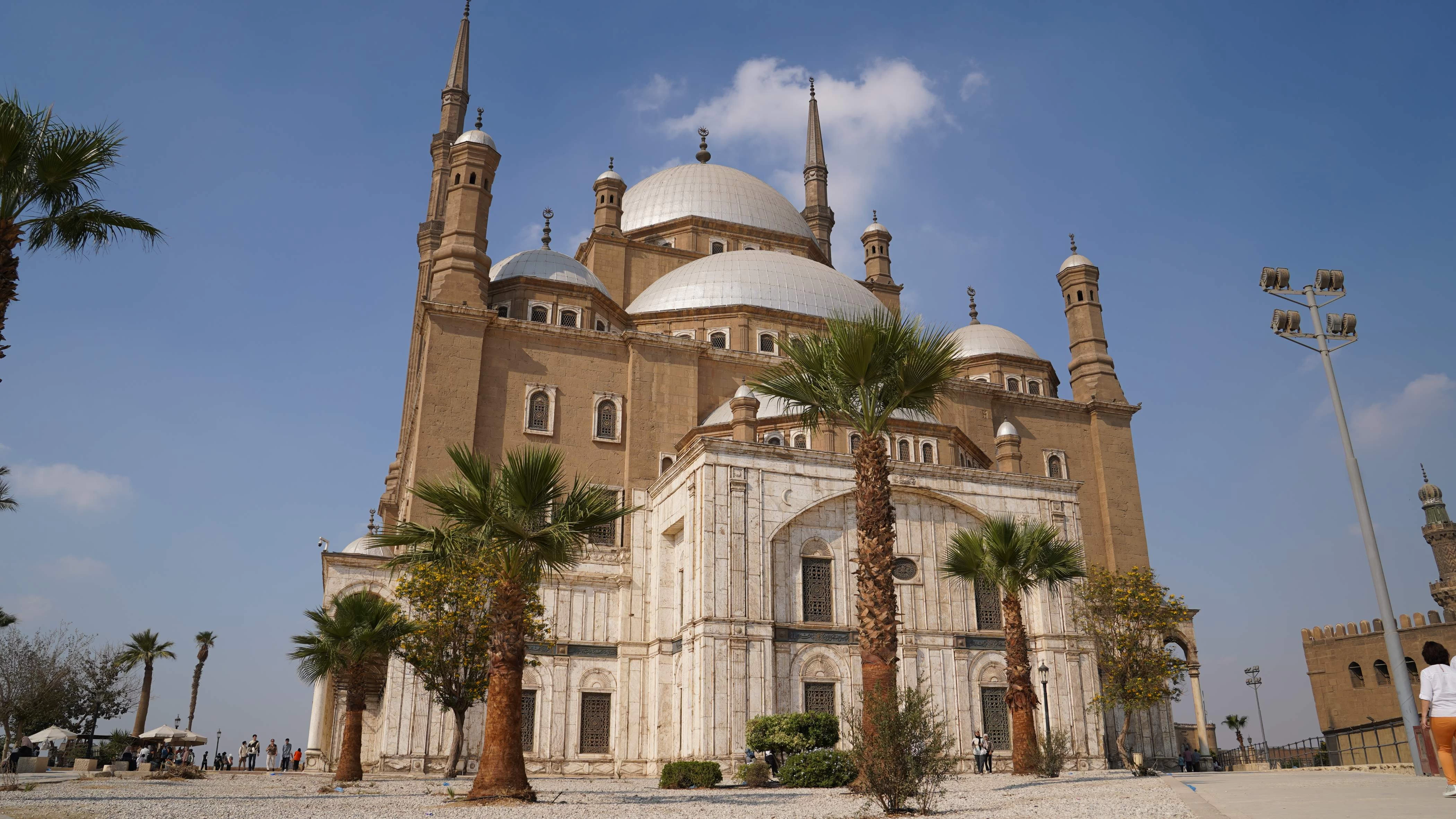
One of its highlights is the Mosque of Muhammad Ali, built in 1830 AD and inspired by the Blue Mosque. The mosque features a spacious courtyard, a fountain used for ablution, a French clock tower, elegant domes, and slender Ottoman-style minarets.
Inside, visitors will find a grand prayer hall crowned by decorative domes that enhance acoustics, along with a mihrab indicating the direction of prayer, ornate pulpits, and the tomb of Muhammad Ali.
The Citadel is also home to the historic Mosque of al-Nasir Muhammad, the beautifully decorated Gawhara Palace, and the Military Museum.
Today, the Citadel is more than a historical monument — it is a scenic destination offering Islamic architecture, panoramic Cairo views, photography opportunities, and a memorable setting for cultural events, conferences, and weddings.